Place · Settlement · St Petersburg and its environs
St Petersburg
Санкт-ПетербургSt Petersburg
- The family here: 1853 – present
- People: 19
On the map
Role in the family history
The capital, to which the chamber Cossack Andrey Ivanovich went in 1853 and to which Fedot Alekseyevich brought the saddle for the Shah; the Convoy barracks at 28 Shpalernaya Street, where Boris Aleksandrovich was born in 1904; the Leningrad of Pushkin House, of the Siege and of Pyatoye Koleso; the birthplace of the chronicle’s author, Vyacheslav Olegovich, where his EdWay was launched in December 2017.
Names over time
St Petersburg
Petrograd
Leningrad
People19
Born here
- Nikolay Fedotovich Kalaushin 1897 – 1977 Generation 6 second cousin three times removed
- Boris Aleksandrovich Kalaushin 1 (14) May 1904 – missing since 15 August 1941 Generation 61904 second cousin three times removed
- Boris Matveyevich Kalaushin 6 August 1929 – 10 June 1999 Generation 71929 third cousin twice removed
- Dmitry Borisovich Kalaushin 1938 – 2011 Generation 7 third cousin twice removed
Named in roster entries
- Andrey Trofimovich Kalaushin b. c. 1801–1807 Generation 2 brother of the 5th great-grandfather
- Ivan Stepanovich Kalaushin 1860 – 1911 Generation 5 first cousin four times removed
- Fedot Alekseyevich Kalaushin 1871 – 1920 Generation 5 first cousin four times removed
- Aleksandr Alekseyevich Kalaushin 1877 or 1878 – 1933 Generation 5 first cousin four times removed
- Nikolay Fedotovich Kalaushin 1897 – 1977 Generation 6 second cousin three times removed
- Matvey Matveyevich Kalaushin 23 July (5 August) 1904 – 10 December 1968 Generation 6 second cousin three times removed
- Boris Aleksandrovich Kalaushin 1 (14) May 1904 – missing since 15 August 1941 Generation 6 second cousin three times removed
- Mariya Aleksandrovna Kalaushina 1910 – c. 1990 Generation 6 second cousin three times removed
- Lyudmila Aleksandrovna Belorusova (née Kalaushina) 1916 – date of death unknown Generation 6 second cousin three times removed
- Boris Matveyevich Kalaushin 6 August 1929 – 10 June 1999 Generation 7 third cousin twice removed
- Dmitry Borisovich Kalaushin 1938 – 2011 Generation 7 third cousin twice removed
- Yefim (Yevfimy) Mikhailovich Kalaushin 25 December 1877 – 1920
- Ivan Nikolayevich Koloushin 10 November 1913 – 3 October 1991
- Kira Yefimovna Shvetsova (née Kalaushina) 14 February 1920 – 22 April 2006
Worked here
- Boris Matveyevich Kalaushin 6 August 1929 – 10 June 1999 Generation 71956–1990–1999 third cousin twice removed
Studied here
- Matvey Matveyevich Kalaushin 23 July (5 August) 1904 – 10 December 1968 Generation 61923–1926 second cousin three times removed
- Boris Aleksandrovich Kalaushin 1 (14) May 1904 – missing since 15 August 1941 Generation 61926–1929 second cousin three times removed
- Boris Fyodorovich Chirskov 1904 – 1966 Generation 61925 husband of the second cousin of the great-grandfather
Died here
- Matvey Matveyevich Kalaushin 23 July (5 August) 1904 – 10 December 1968 Generation 61968 second cousin three times removed
- Lyudmila Aleksandrovna Belorusova (née Kalaushina) 1916 – date of death unknown Generation 6 second cousin three times removed
Events involving the family
- Andrey Ivanovich Kalaushin b. c. 1817–1819 Generation 31853 brother of the 4th great-grandfather
- Matrona (Matryona) Andreyevna Kalaushina b. 1837 Generation 41853 first cousin five times removed
- Feodosiya (Fedosya) Andreyevna Kalaushina b. 1841 Generation 41853 first cousin five times removed
- Fedot Alekseyevich Kalaushin 1871 – 1920 Generation 51889 first cousin four times removed
- Aleksandr Alekseyevich Kalaushin 1877 or 1878 – 1933 Generation 51904 first cousin four times removed
- Matvey Matveyevich Kalaushin 23 July (5 August) 1904 – 10 December 1968 Generation 61923–1929–1937–1946–1957–1968 second cousin three times removed
- Boris Aleksandrovich Kalaushin 1 (14) May 1904 – missing since 15 August 1941 Generation 61904–1929 second cousin three times removed
- Emiliya Fyodorovna Kalaushina (née Chirskova) Generation 61904–1929–1968 wife of the second cousin of the great-grandfather
- Boris Matveyevich Kalaushin 6 August 1929 – 10 June 1999 Generation 71929–1956–1987–1994 third cousin twice removed
Events20
Chamber Cossack to the Tsesarevna
◈ published sourceSt Petersburg
Naser al-Din Shah in St Petersburg
◈ published sourceSt Petersburg
◆ documentedSt Petersburg
Mozaffar ad-Din Shah’s state visit
◆ documentedSt Petersburg
◇ family testimonySt Petersburg
◇ family testimonySt Petersburg
◈ published sourceSt Petersburg
Birth of Boris Matveyevich Kalaushin
◈ published sourceSt Petersburg
◈ published sourceSt Petersburg
◈ published sourceSt Petersburg
The Pushkin monument on Arts Square
◆ documentedSt Petersburg
◈ published sourceSt Petersburg
His paintings shown for the first time
◈ published sourceSt Petersburg
◈ published sourceSt Petersburg
Oleg Vyacheslavovich at Pyatoye Koleso
◇ family testimonySt Petersburg
◆ documentedSt Petersburg
Institutions14
- the St Petersburg and Leningrad Oblast Union of JournalistsSociety
- Leningrad UniversityUniversity
- the Union of Artists of the USSRSociety
- the Apollon societySociety
- Pyatoye Koleso magazine (5 Koleso)Periodical
- the State Russian MuseumMuseum
- the Museum of Art of St Petersburg, 20th–21st Centuries (MISP)Museum
- the People’s Museum “And the Muses Were Not Silent…”Museum
- the F.M. Dostoevsky Literary Memorial MuseumMuseum
- the State Memorial Museum of the Defence and Siege of LeningradMuseum
- the Litfond auction houseAuction house
- the Russian State Historical Archive (RGIA)Archive
- the St Petersburg Branch of the Archive of the Russian Academy of SciencesArchive
- the National Library of Russia (RNB)Library
Documents and photographs7
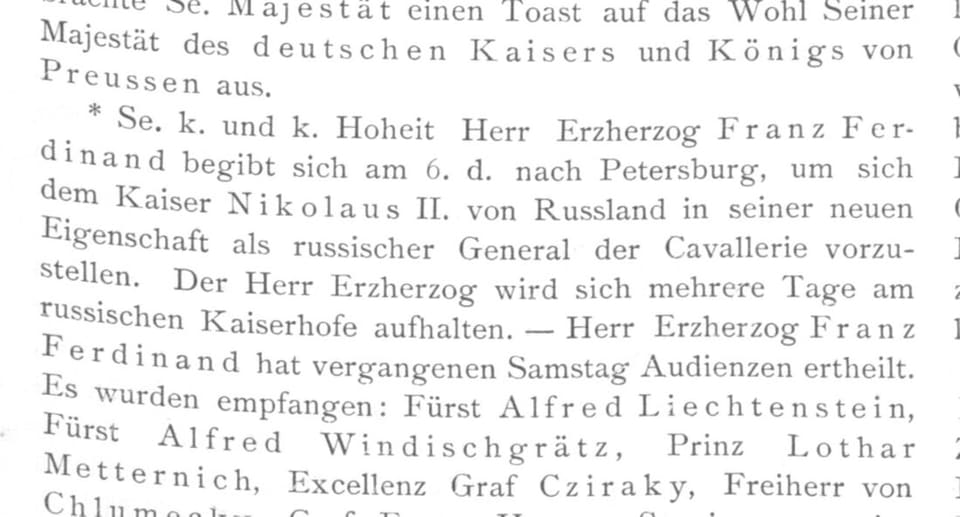
◆ Franz Ferdinand travels to St Petersburg to present himself to Nicholas II as a Russian General of Cavalry, February 1902 (Sport und Salon)ÖNB / ANNO — Austrian National Library 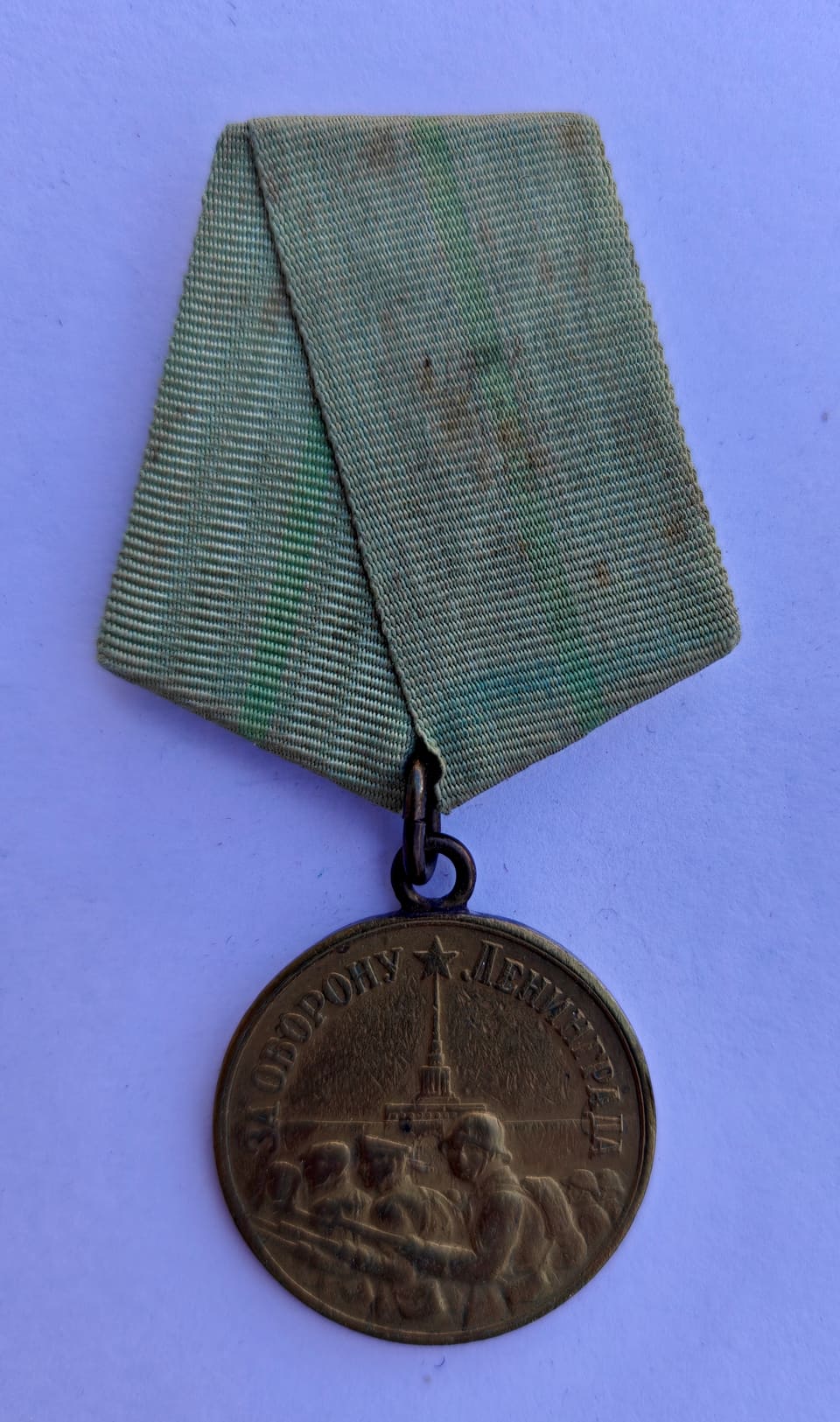
Medal "For the Defence of Leningrad", obversePhoto: Anastasiya Lvova / Wikimedia Commons 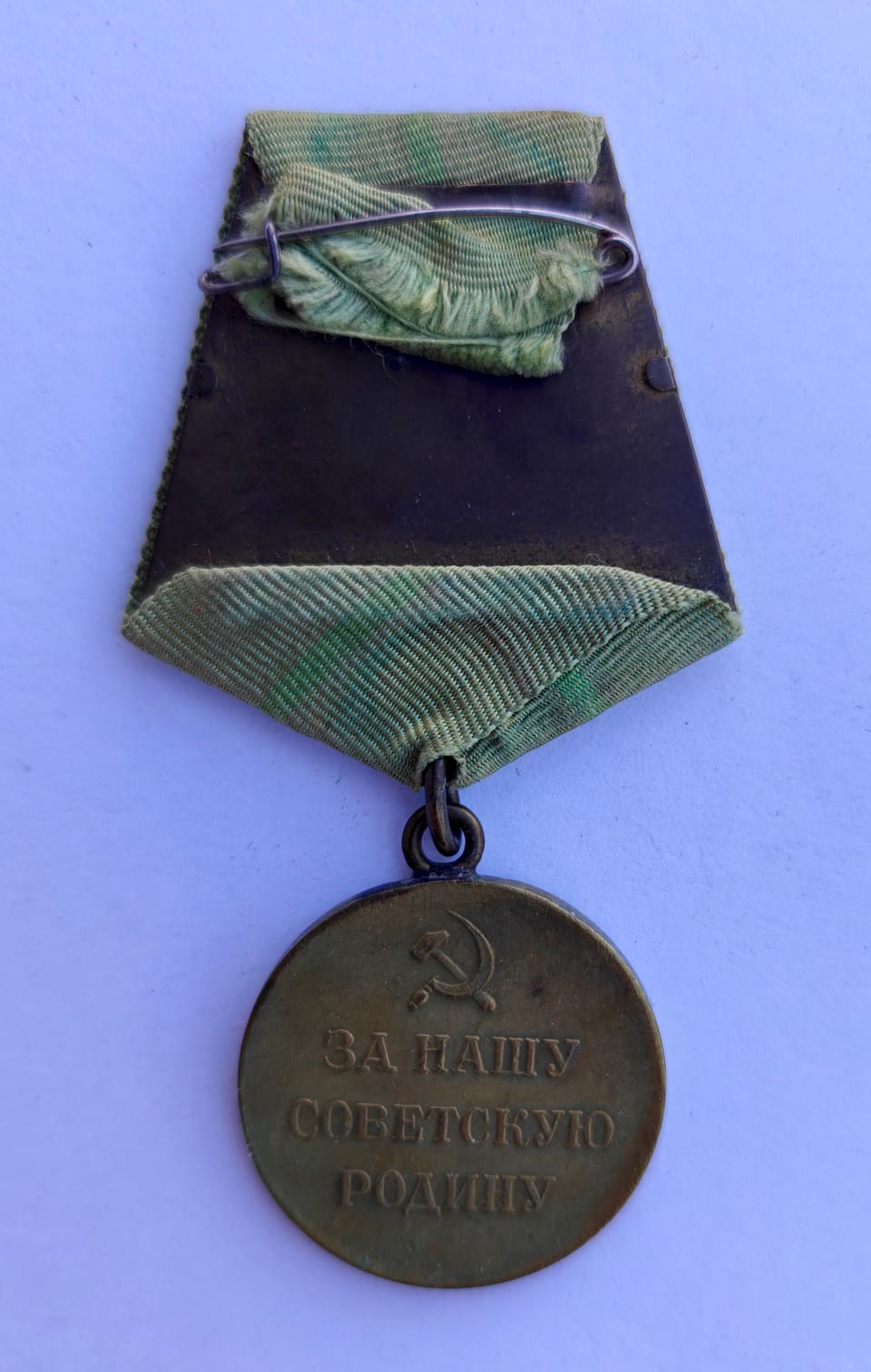
Medal "For the Defence of Leningrad", reversePhoto: Anastasiya Lvova / Wikimedia Commons 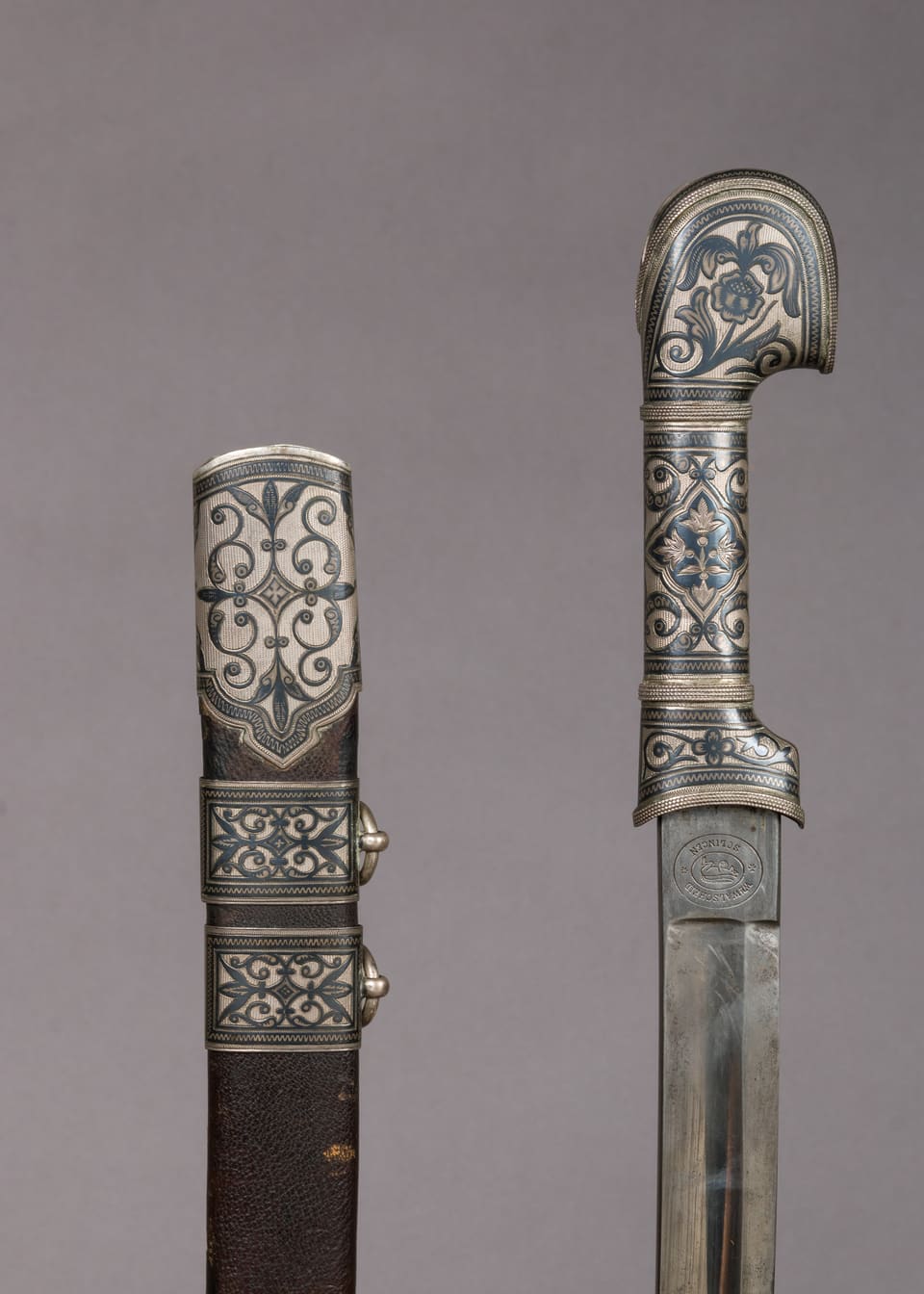
Caucasian-style shashka, St Petersburg, c. 1875–1900 — for illustrationThe Metropolitan Museum of Art, New York (CC0) 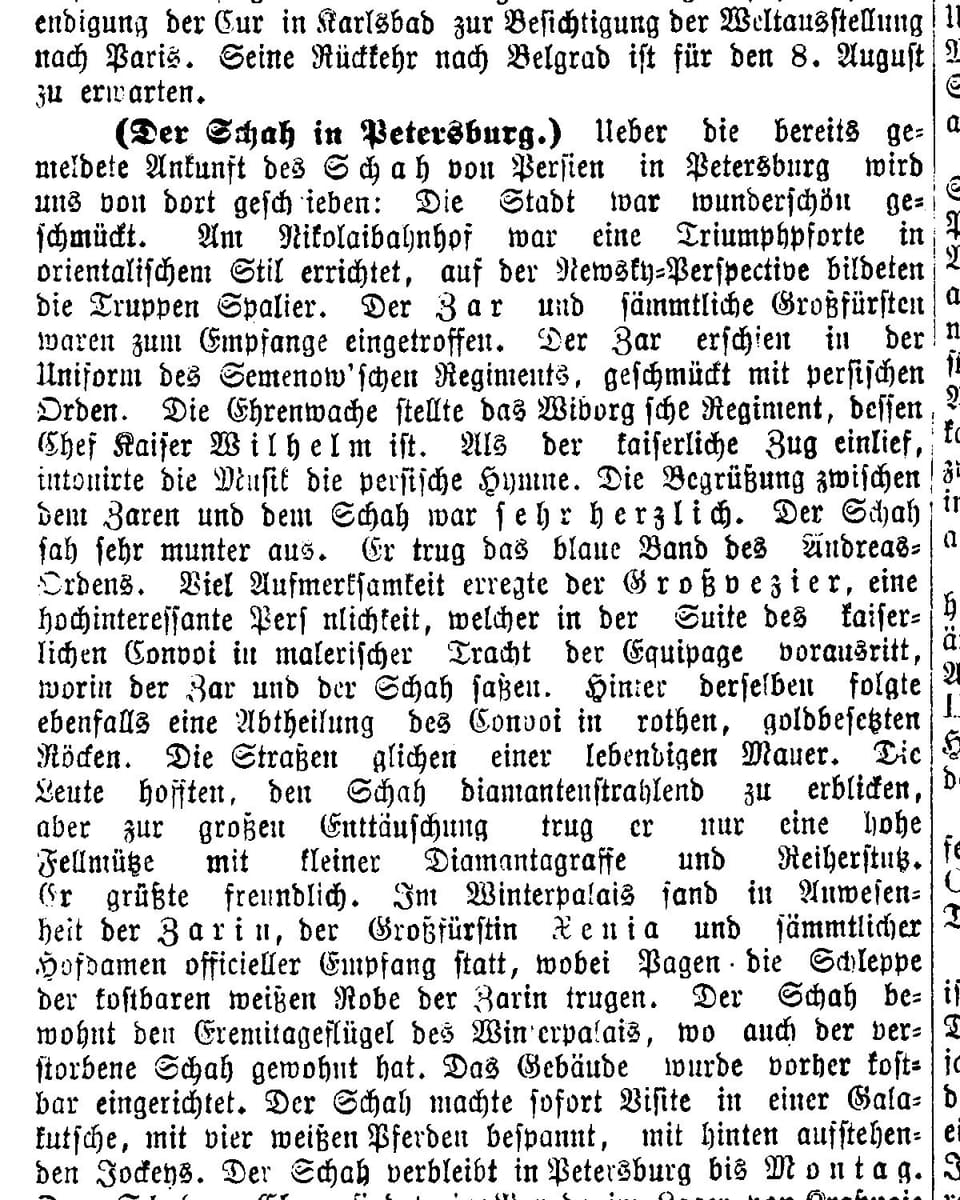
◆ "Der Schah in Petersburg" — the Shah's entry into St Petersburg, July 1900 (Neues Wiener Journal)ÖNB / ANNO — Austrian National Library 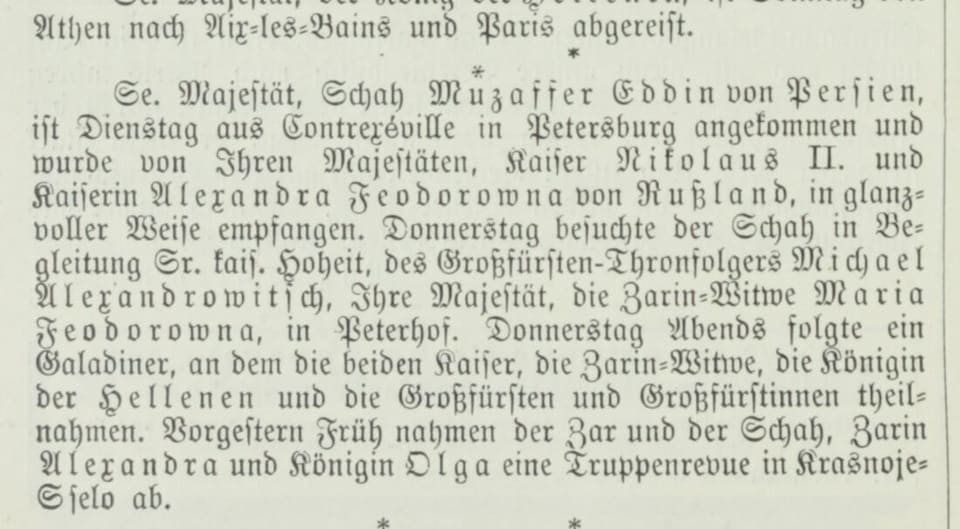
◆ Chronicle of the Shah's visit to St Petersburg, July 1900 (Wiener Salonblatt)ÖNB / ANNO — Austrian National Library 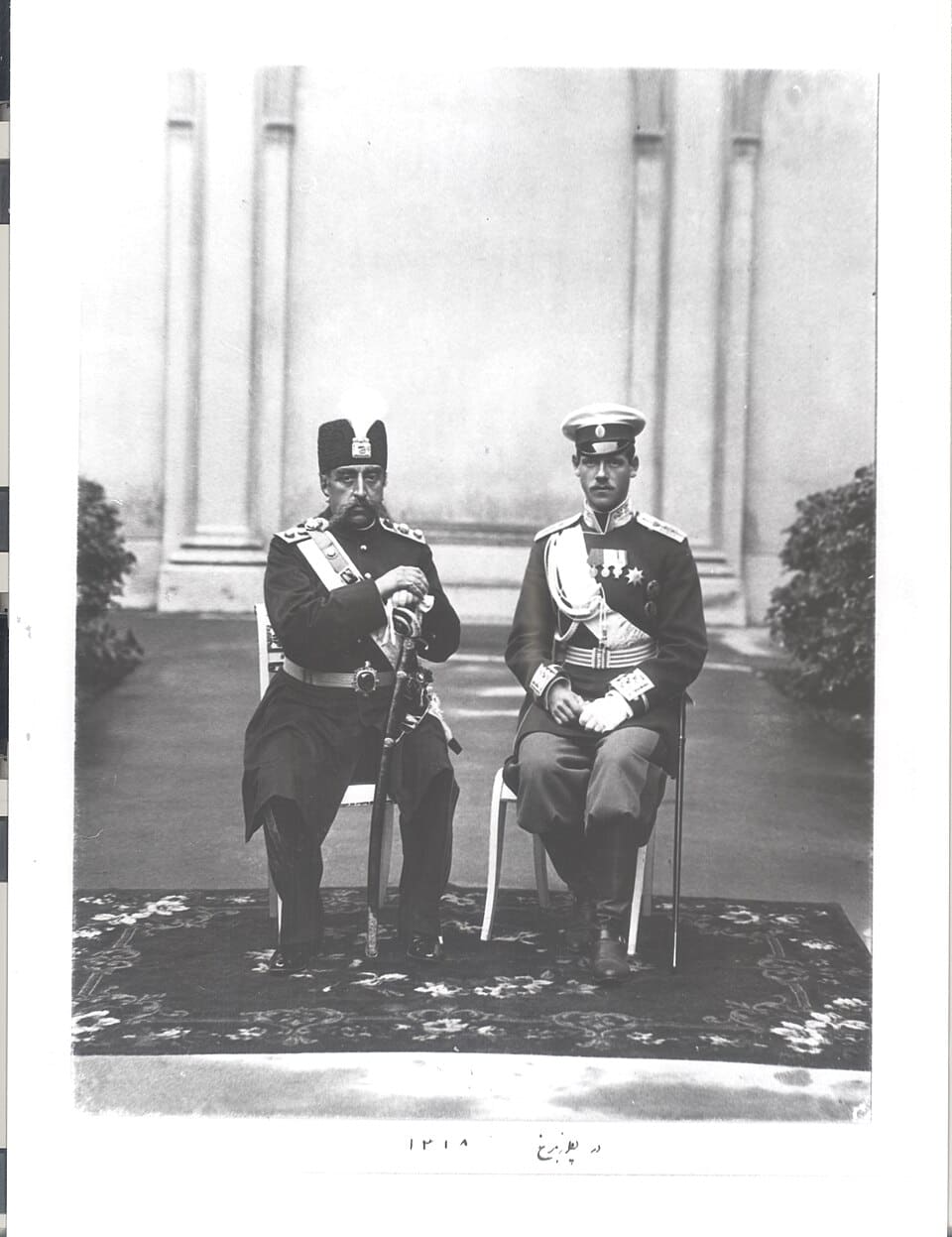
Mozaffar ad-Din Shah and the Tsesarevich Grand Duke Mikhail Alexandrovich, St Petersburg, 1900Golestan Palace Library, Tehran; Wikimedia Commons


Works and objects39
- Strelets: First Collection (1915), with B. Kalaushin’s owner’s inscription1915the Litfond auction house
- O. Mandelstam, On Poetry (1928), from B.M. Kalaushin’s library1928the Litfond auction house
- V.G. Korolenko, Without a Tongue (editor, introduction, 1931)1931the Russian State Library (RGB)
- A.S. Pushkin, Dubrovsky. The Captain’s Daughter (notes, 1935)1935the Russian State Library (RGB)
- Guidelines for organising exhibitions (1936–1946)1936–1946the Russian State Library (RGB)
- T.G. Shevchenko in Portraits and Illustrations (1940)1940the National Library of Russia (RNB)
- N. Shchedrin, Complete Works, vol. 1 (text and commentary, 1941)1941the Russian State Library (RGB)
- Home-made booklets of the Siege and the evacuation (1941–1942)1941–1942the People’s Museum “And the Muses Were Not Silent…”
- Boris Kalaushin’s home-made booklets from the Siege and the evacuation (copies)1941–1942the People’s Museum “And the Muses Were Not Silent…”
- The S.M. Kirov Apartment Museum: a guide (1949)1949the Russian State Library (RGB)
- Dissertation on Lenin’s polemic with Rosa Luxemburg on the national question (1951)1951the Russian State Library (RGB)
- Pushkin in Portraits and Illustrations (compiled by M.M. Kalaushin)1951; 1954the N.V. Gogol House Memorial Museum
Show all (39)
- Guides to the Pushkin museums (editor, 1951–1958)1951–1958the Russian State Library (RGB)
- Album Nikolay Alekseyevich Nekrasov: Life and Work (compiled by M.M. Kalaushin)1955the All-Russian Pushkin Museum
- Books illustrated by B.M. Kalaushin (1956–1999)1956–1999the National Library of Russia (RNB)
- Catalytic Chlorination of Butanes and Hydrochlorination of Butylenes (dissertation, 1959)1959the Russian State Library (RGB)
- The Narva Gate District in 1917 (1960)1960the National Library of Russia (RNB)
- A.P. Chekhov: a photographic exhibition (1963)1963the National Library of Russia (RNB)
- Caricature “Kalaushin Boris Matveyevich”1964the State Memorial Museum of the Defence and Siege of Leningrad
- Introducing Zero-Defect Production at Ryazan Bakery No. 3 (1965)1965the Russian State Library (RGB)
- Reclining Woman 11965the Museum of Art of St Petersburg, 20th–21st Centuries (MISP)
- Reclining Woman 21965the Museum of Art of St Petersburg, 20th–21st Centuries (MISP)
- Winter1966the Museum of Art of St Petersburg, 20th–21st Centuries (MISP)
- The Flower Fairy1968the State Russian Museum
- Portrait of Tamara1970the Museum of Art of St Petersburg, 20th–21st Centuries (MISP)
- On Combat Watch: North-Western Water Transport Workers in the Great Patriotic War (1972)1972the National Library of Russia (RNB)
- Landscape1979the Museum of Art of St Petersburg, 20th–21st Centuries (MISP)
- Vitaly Vitalyevich Tambovtsev: exhibition catalogue (1980)1980the National Library of Russia (RNB)
- Transcript of the conference The Origins of the Soviet Children’s Book (1987) — B.M. Kalaushin’s copy1987the Litfond auction house
- Dacha Motif1993the Museum of Art of St Petersburg, 20th–21st Centuries (MISP)
- The Apollon almanac, 3 vols, inscribed by B.M. Kalaushin1994–1995; надпись 22.01.1994the Litfond auction house
- The Apollon almanac (1994–1996)1994–1996the National Library of Russia (RNB)
- Portrait of a Woman 11995the Museum of Art of St Petersburg, 20th–21st Centuries (MISP)
- Portrait of a Woman 21995the Museum of Art of St Petersburg, 20th–21st Centuries (MISP)
- Portrait of a Woman 31995the Museum of Art of St Petersburg, 20th–21st Centuries (MISP)
- Spring No. 661996the Museum of Art of St Petersburg, 20th–21st Centuries (MISP)
- Moist Earth1996the Museum of Art of St Petersburg, 20th–21st Centuries (MISP)
- Landscape. Early Spring1996the Museum of Art of St Petersburg, 20th–21st Centuries (MISP)
- Futurist Drawing: exhibition catalogue (1997)1997the National Library of Russia (RNB)
In the chronicle
- …was to fill the vacant post of chamber Cossack to the Tsesarevna. He was to be “sent without delay to St Petersburg, with his whole family if he so wishes”, and provided with travel and subsistence money; a copy of the…
- …His family in 1848 — his wife Mariya and daughters Matrona and Feodosiya — is the very family that left for St Petersburg. The database of service records compiled from GAKK materials lists, from a service record…
- …his workshop spent two months making a saddle for the Shah of Persia. Fedot Alekseyevich took the saddle to St Petersburg himself. There, “at a review of the Guards, on the last day before going home (at the end of his service)”,…
- …; in 1848 he had a wife and daughters Matrona and Feodosiya — the very family that went with him to St Petersburg — and in 1857 his daughter appears in the parish register as “the chamber Cossack’s unmarried daughter…
- Fedot Alekseyevich served in the Convoy from 1892, first at Gatchina under Alexander III and then in St Petersburg under Nicholas II, as an uryadnik of the Life Guards 2nd Kuban Sotnia. In 1896 Uryadnik…
- …on the order of Emperor Nicholas II; the work took two months. Fedot Alekseyevich took the saddle to St Petersburg himself. There, at a review of the Guards on his last day before going home at the end of his service,…
- …the 1850s until 1911 Kalaushins of Batalpashinskaya served at the Imperial Court: with the Tsesarevna in St Petersburg, as uryadniks (Cossack non-commissioned officers) at Gatchina, in St Petersburg and at Tsarskoye Selo; and…
- On 21 January 1853 a letter left the Chancellery of the Heir to the Throne in St Petersburg, addressed to the nakazny ataman (the appointed head) of the Caucasus Line Cossack Host, Major-General…
- …Voronezh — 888¼ versts, 26 roubles 49¾ kopecks in silver — together with subsistence money from Stavropol to St Petersburg. Andrey Kalaushin was appointed chamber Cossack on 2 September 1853.
- …; from 1892 he served in the Convoy, “first at Gatchina, under Alexander III, and then in the capital, St Petersburg, under Nicholas II”, as an uryadnik of the Life Guards 2nd Kuban Sotnia. Aleksandr…
- …Alekseyevich, uryadnik, and Kalaushin, Mikhail Alekseyevich, and Fisenko, Ivan Mikhailovich, Cossacks, in St Petersburg”; an honourable mention to “Kalaushin, Matvey Alekseyevich, uryadnik, in Yekaterinodar”…
- …on the order of Emperor Nicholas II; the work took two months. Fedot Alekseyevich took the saddle to St Petersburg himself. There, at a review of the Guards on his last day before going home at the end of his service,…
- …on the order of Emperor Nicholas II; the work took two months. Fedot Alekseyevich took the saddle to St Petersburg himself. There, “at a review of the Guards, on the last day before going home (at the end of his service)”,…
- …and awarded the badge for service in the Convoy”. The only state visit of a Persian shah to St Petersburg in those years was that of Mozaffar ad-Din Shah, 4–10 July 1900 Old Style (17–23 July New Style)…
- …Emperor had handed out at the review — and two and a half weeks after that, on 4 July, the Shah arrived in St Petersburg. This also makes sense of the Emperor’s question about how long the master had been in town, and of his…
- …committee in the aul (village) of Khodz, and later became a museum curator and Pushkin scholar in Leningrad.
- …descendants of the Kalaushins now live in Vladikavkaz, Yessentuki, Maykop, Nalchik, Nevinnomyssk, Omsk, St Petersburg, Tbilisi, Tolyatti, in Bekeshevskaya stanitsa “and even in the USA”. By its own…
- …as the former stanitsa (Cossack village) of Batalpashinskaya had been called since 1939. They were in Leningrad and Terijoki, in Vladikavkaz and Nalchik, in Kustanay and Sukhumi, in the stanitsas of Bekeshevskaya and…
- Boris Aleksandrovich Kalaushin was born in St Petersburg on 1 May 1904 Old Style (14 May New Style), in the barracks of His Majesty’s Own Convoy — the Cossack…
- …had fallen back from Novgorod by two roads and that the staff and the political department had taken the Leningrad highway. One of them, who recognised Boris Aleksandrovich from a photograph, wrote that as they fought their…
- The youngest son of a saddler from a Kuban stanitsa (Cossack village) became one of the people who built Leningrad’s literary museums. Matvey Matveyevich Kalaushin worked for more than twenty years in the…
- …University, and in 1923 he was transferred “for outstanding progress in his studies” to the university in Petrograd. “From 1923 the life, fate and work of Matvey Matveyevich became inseparably bound up with Petersburg,” his…
- …submitted a work on “Pushkin and the Russian Historical Novel”, and the 1934 directory of Leningrad scholars gives his field, briefly, as “the historical novel of the ’30s”. He combined postgraduate…
- …of Fedot Alekseyevich Kalaushin, Matvey Alekseyevich’s brother; Fedot Alekseyevich took it to St Petersburg himself, and the Emperor praised the work and there and then congratulated the master on the title of…
- …60 of the Kuban Cossack Host of 17 June 1900, and the only state visit of a Persian shah to St Petersburg in those years was that of Mozaffar ad-Din Shah, 4–10 July 1900 Old Style (17–23 July New Style)…
- Boris was born in Leningrad on 6 August 1929. His father, the son of the Labinskaya saddler, worked from 1931…
- …stanitsa as a young man, and that Aleksandr Alekseyevich served as an uryadnik of the Convoy in St Petersburg in 1904–1908. Note on the roster. The entry for Matvey Matveyevich gives 1947 as the…
- …the Archduke was honorary chief of the Russian 26th Bug Dragoon Regiment, and in February 1902 he came to St Petersburg to present himself to Nicholas II as a General of Cavalry of the Russian army…
- …on the order of Emperor Nicholas II; the work took two months. Fedot Alekseyevich took the saddle to St Petersburg himself. There, “at a review of the Guards, on the last day before going home (after the end of service)”,…
- …lives through the Revolution and the Civil War there, then in the 20th century moves by way of Chimkent to Leningrad — St Petersburg, and in the 21st to Moscow and the Emirates. Along it one can trace how the family’s work…
- …the Rear”; the family calls it the Military Transport Academy of the Rear and Transport in Leningrad. He left the service on grounds of ill health with the rank of lieutenant colonel.
- …father, Oleg Vyacheslavovich Kalaushin, is a motoring journalist. According to the family, he worked for the St Petersburg magazine Pyatoye Koleso (“The Fifth Wheel”, also styled 5 Koleso) from 1995 to 2019. The earliest…
14. Sources and Further Research
- Russian State Archive of Literature and Art (RGALI) holds letters of the St Petersburg branch: a letter of 1968 from Emiliya Fyodorovna, wife of Matvey Matveyevich, to Yu.G.…
- Central State Historical Archive of St Petersburg (TsGIA SPb), f. 19. Op. 128 — parish registers of the first-line regiments of the Kuban Host and of its…
- Central State Archive of St Petersburg (TsGA SPb), f. R-7240 (Leningrad University): △ probably the student file of B.A. Kalaushin, 1926–1929,…
On the family route
The family’s road: the Khoper — Stavropol — Batalpashinskaya — Labinskaya — St Petersburg
St Petersburg: chamber Cossack to the Tsesarevna (1853), Convoy uryadniks, Pushkin House, the All-Union Pushkin Museum